

How to Photograph Embroidery: Three Phone Photos That Tell the Story
You lift your new sweatshirt towards the light and the embroidery comes alive. Then you take a photograph, and the detail that caught your eye looks flat, blurry or much brighter than it does in your hands.
Learning how to photograph embroidery is less about creating an elaborate set and more about deciding what the photograph needs to show. A useful image lets someone understand the garment, see the stitching and recognise the detail you chose.
Whether you are sharing a personalised gift with family elsewhere in Canada or keeping a record of a piece you love, begin with your phone, a clear surface and three deliberate photographs.
Give each photograph a different job
Before moving the garment around, plan a small set. Take one view of the whole piece, one close detail and one image that gives it personal context. This avoids filling your camera roll with nearly identical crops that leave the same questions unanswered.
The whole-garment view explains where the embroidery sits. The detail view shows the lettering or motif. The personal image might show the sweatshirt being worn, folded beside a handwritten gift card or resting with a favourite pair of jeans.
For example, a sweatshirt with initials above the cuff needs more than a tight picture of the letters. Include a view that connects the cuff to the sleeve. Otherwise, someone seeing the image may have no idea where the personalisation belongs.
Prepare a simple scene you can repeat
Choose a clean surface with enough space for the garment. A plain tabletop or an uncluttered section of floor can be a useful starting point. Gently arrange the sleeves and remove loose surface lint without altering the stitching.
Keep the garment's natural shape. You do not need to pull it taut or hide every fold. Aim to make the design easy to see while preserving the way the fabric actually falls.
Try the setup near a window, outside a direct patch of sunlight. Take a test image before adding props. If a bright strip crosses the design or your phone casts a shadow over it, move the garment or change where you stand.
Start with one source of light where practical. If a nearby lamp makes one side of an ivory garment look noticeably warmer, try switching it off and compare the result. Let the photograph guide the adjustment rather than committing to a complicated arrangement.
Take the whole-piece view first
For a flat layout, hold the phone as square to the garment as you comfortably can. Check the edges of the screen: have you accidentally cropped a sleeve, tilted the neckline or hidden the embroidered area beneath a fold?
Leave some breathing room around the piece. A photograph that includes the complete sweatshirt is useful even if your favourite final image will be a close-up. You can return to it later to understand the overall proportions.
If you are photographing the piece on someone, ask them to stand naturally before trying a styled pose. Take one straightforward front view, then a second image that shows the personal detail. Check that hair, crossed arms or an outer layer is not covering the stitching.
Move closer, then check what is actually sharp
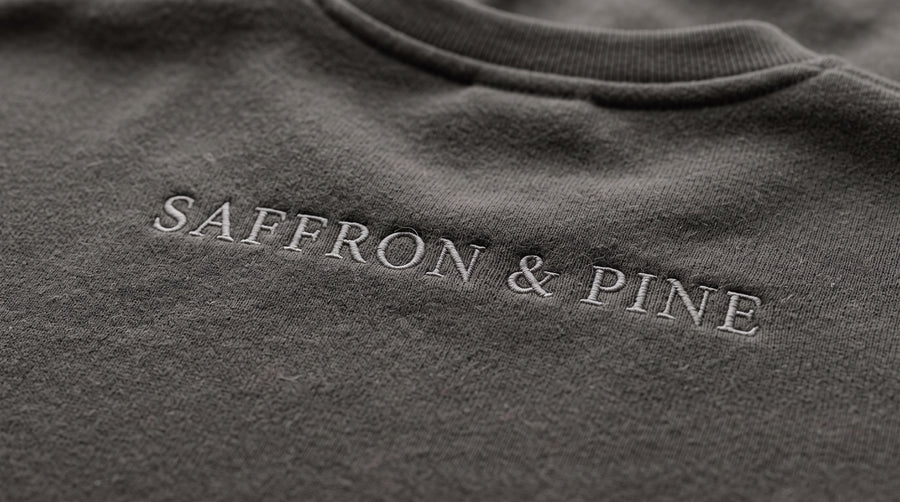
For the detail photograph, move closer gradually and watch whether the lettering remains clear. If the camera struggles to settle, step back a little. A slightly wider sharp photograph is more useful than a very tight blur.
On iPhone, Apple's camera setup guide explains how to choose a focus area and adjust exposure; touching and holding the focus area can lock focus and exposure. Other phones have their own controls, so check the guidance for your model.
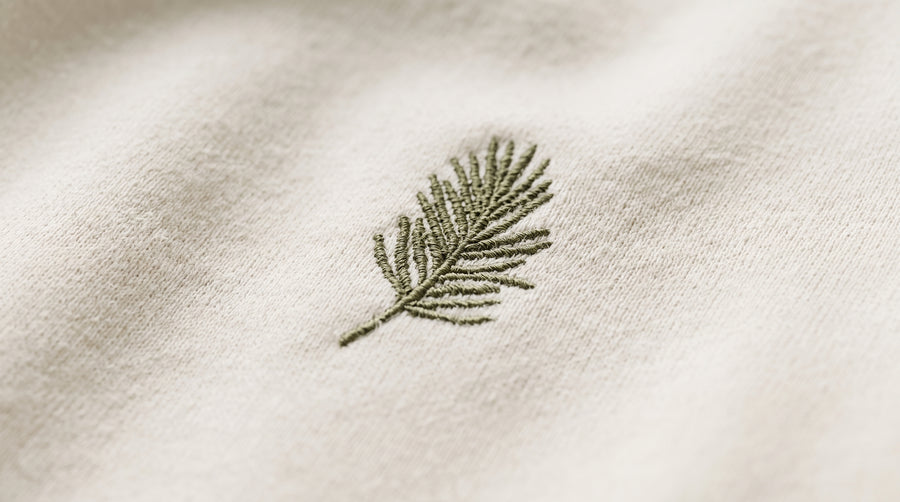
Review the saved photograph, not just the live preview. Look at the first and last letters of a name, the ends of a botanical motif and the surrounding fabric. If only the middle is clear, try a more direct angle and take another frame.
Then make one small change to the direction of the light. Rotate the garment slightly or move to the other side of the setup. Compare which image makes the thread easier to see without losing the garment's colour.
Keep colour and texture believable
The most dramatic edit is not always the most useful one. Before applying a filter, compare the photograph with the garment beside you. Does charcoal still look like charcoal? Is a muted thread now unexpectedly vivid? Has a cream sweatshirt become stark white?
Make modest brightness and cropping adjustments, then compare again. Avoid editing the shape of the letters, smoothing away the stitches or using a tool that invents fabric detail. Those changes can turn a record of your garment into a different design.
Keep the original file alongside any edited version. A photograph is a helpful visual reference, but it should not be treated as an exact thread-colour specification. If you are discussing another order, retain the written colour and design details too.
Add the story without giving everything away
Your final image can explain why the piece matters. Show a hand resting beside the embroidered cuff, or include a card with a short message. One meaningful element is often enough; the garment does not need a table full of accessories.
Before sharing, check the background and any visible text. A gift card may contain a private message, and a personalised date may reveal more than the wearer wants to make public. Ask before posting a recognisable photograph of someone else.
For ideas on wearing the finished piece, explore our embroidered sweatshirt styling guide. Visit Saffron & Pine for personal embroidery inspiration, and follow Saffron & Pine on Instagram. Keep the photograph honest, let the detail be seen and leave room for the story behind it.