

Embroidery on Your Own Clothing in Abbotsford: What to Ask First
You already have the sweatshirt. The fit is right, the colour works with everything, and you can picture a small embroidered detail making it feel entirely yours. Buying another garment seems unnecessary. Could you simply bring this one to an embroiderer?
If you are considering embroidery on your own clothing in Abbotsford, begin with an assessment rather than a drop-off. The useful first question is whether a studio accepts customer-supplied garments and can review your particular piece, design and placement together.
This guide helps you prepare that conversation. Acceptance, pricing and arrangements need to be confirmed for each project; it is not a promise that every garment can be embroidered or that a particular service is currently available.
Decide why you want to use this piece
There are several good reasons to start with clothing you own. Perhaps you have finally found a comfortable fit. Perhaps your small business has already purchased matching crewnecks. Or perhaps the sweatshirt has a personal history that a new one could never replace.
Tell the maker which reason matters. If the priority is fit, another garment might be an acceptable alternative. If the priority is a specific team colour, share the exact style reference. If the piece is irreplaceable, that deserves a separate conversation before anyone discusses thread colours.
Try this brief: “I would like to personalise this existing sweatshirt because I wear it often. I am flexible about placement, but I want to keep the overall look understated.” It gives the maker something useful to work with.
Send a small, clear set of photographs
A close-up of the proposed design area is helpful, but it is only part of the picture. Send enough context for the studio to decide what it needs to inspect next.
- A full front and back view of the garment, laid flat.
- A closer photograph of the intended embroidery location.
- An inside view of that area, where accessible without taking anything apart.
- Clear photographs of the fabric-content and care labels.
- The brand and style reference, if you have them.
Include existing decoration, pockets, seams and any lining in the photographs rather than cropping them out. Mention visible wear, repairs or marks. You are helping the embroiderer assess the actual item, not trying to present a flawless product photograph.
Photos can start the discussion; ask whether a physical inspection is needed before acceptance.
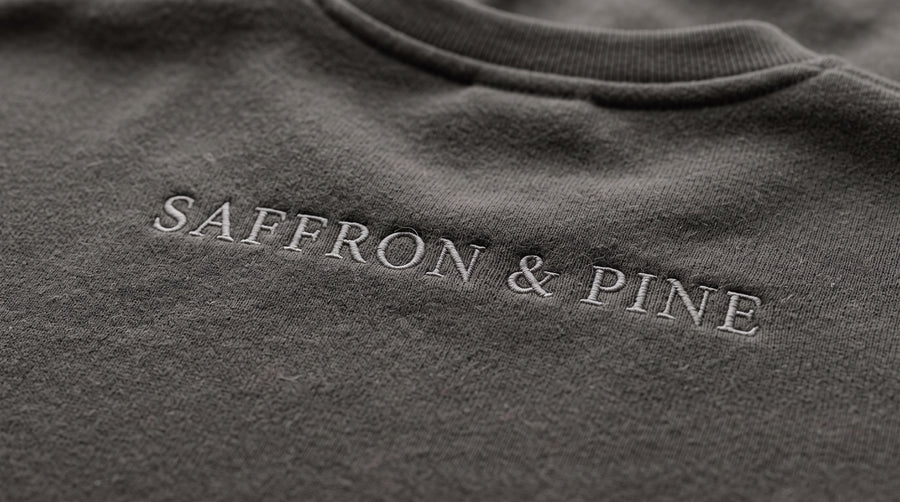
Show the design and the placement together
“A small name” leaves room for different interpretations. Send the exact text or artwork and an approximate finished width. Add a marked-up copy of a garment photograph showing where you imagine it sitting. Keep an unmarked original alongside it.
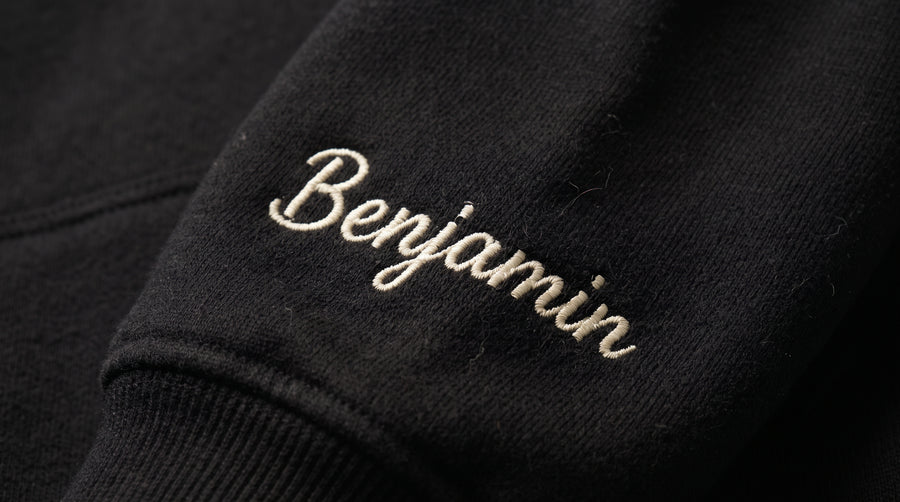
For example, say “on the sleeve just above the cuff” rather than only “on the sleeve.” For a chest design, identify the wearer’s left or right. Ask the maker to confirm the final position and dimensions instead of treating your rough annotation as a production measurement.
If the piece has a pocket or lining, ask whether the proposed work can be completed while preserving the features you use. You do not need to diagnose the construction yourself. You do need to explain that keeping a pocket usable, for instance, is part of your brief.
Treat a sentimental garment differently
A replaceable blank sweatshirt and a loved one’s old hoodie deserve different decisions. Before proceeding with a sentimental piece, ask yourself whether you would still be comfortable if the result differed from the picture in your head.
Tell the studio that the garment is irreplaceable. Ask what can be assessed in advance, what remains uncertain and whether it recommends leaving the item untouched. Request an explanation of its policy for customer-supplied pieces, including how problems would be handled.
If you feel uneasy, consider keeping the original as it is and using a new garment for the tribute. A meaningful word or date can connect the two without requiring the original to become the embroidery project.
For a group, make an item-by-item list
Imagine an Abbotsford business has already bought six crewnecks and wants to add its logo. Before handing over the bag, the organiser should list each item’s style, colour and size, and note whether every piece gets identical embroidery.
If individual names are being added, match each checked spelling to one specific garment. Do not leave the studio to infer that the largest sweatshirt belongs to a particular person. Include any differences in garment construction or existing decoration, even when the pieces look similar at first glance.
Ask how the studio prefers items to be identified and packed. A shared inventory gives both sides a clear record of what was received and what should come back.
Agree on the handover before making the trip
For an Abbotsford enquiry, proximity can make a conversation feel easy, but it should not replace confirmed arrangements. Ask whether an appointment, shipping or another handover method is appropriate. Do not assume a studio offers walk-in access or collection.
Confirm whether the garment should arrive freshly cleaned and how the maker wants it prepared. Avoid removing labels, unpicking seams or attempting alterations unless the studio specifically requests them.
Then confirm the full quote, what approval is required and when completion can realistically be expected. Our Abbotsford embroidery quote guide explains the separate costs and details worth checking. Supplying the clothing is one part of the project, not a substitute for a complete written brief.
Begin with the garment you actually have
The best starting point is a clear description, useful photographs and an honest conversation about what matters to you. That gives the maker room to assess the piece and gives you room to choose confidently.
Explore Saffron & Pine and ask about current options for your project before committing to a plan. For embroidery details and design inspiration, follow Saffron & Pine on Instagram.