

Embroidered Market Apparel in Chilliwack: Help Shoppers Find You
A shopper pauses at your table, picks up a piece and looks around. They have a question, but the person beside the display could be the maker, a helper or another customer. That small moment is a useful place to begin designing your market-day clothing.
Embroidered market apparel in Chilliwack can have a simple purpose: help visitors recognise who belongs to your business. For an independent maker or small stall team, the design should make starting a conversation feel easy.
Before choosing a decorative detail, look at your clothing from the other side of the table. What can a newcomer actually see, and what will it tell them?
Give the garment one clear introduction
Your display might already tell a rich story through packaging, photographs and beautifully arranged products. The sweatshirt does not need to repeat all of it. Choose the identifying detail that connects the person to the stall most directly.
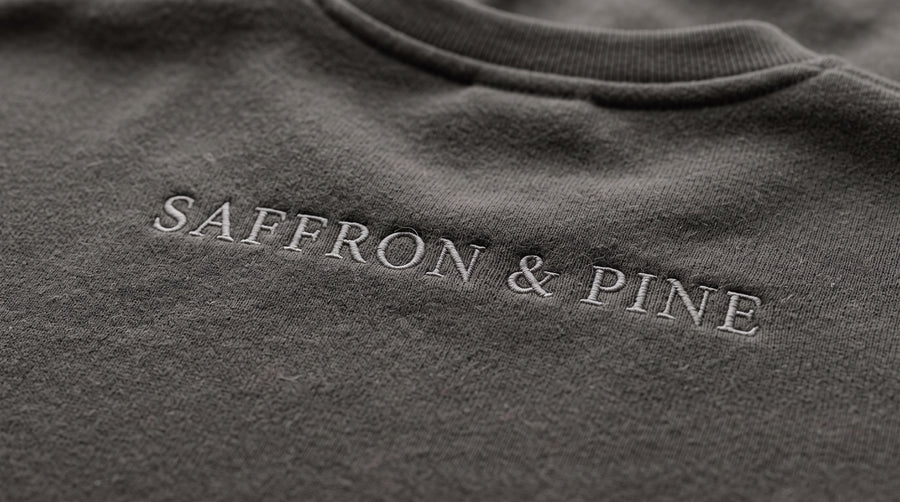
If your sign uses a business name, that same name is a sensible starting point for the garment. A symbol alone may be meaningful to regular customers while leaving a first-time visitor unsure. Consider whether someone encountering your work today could connect the embroidered mark to your table without an explanation.
Imagine a fictional Chilliwack ceramicist preparing for a selling day with one helper. Their packaging features a detailed illustration, but the stall sign leads with the studio name. A clear version of that name on both garments would give the shopper a consistent introduction. The illustration could remain on the packaging, where there is more room to enjoy it.
Design around the table, apron and outer layer
A layout can look lovely on a flat garment and disappear during the day you bought it for. An apron may cover the chest. A zipped jacket may conceal the whole sweatshirt. A table display may hide a lower placement when you are seated.
Recreate your working outfit before deciding where the embroidery belongs. Put on the layers you expect to use, stand behind a table and arrange a few objects at your usual display height. Then sit down, reach for a bag and turn towards an imagined customer.
Ask which part of the garment remains visible during those ordinary movements. A sleeve detail may be attractive but turn away during conversation. A back design has a different job from a front design: it may be visible while you arrange stock, then disappear when you face someone.
Use this exercise to narrow the placement brief, then ask the embroiderer which options suit the selected garment. If your identifying layer is usually covered, reconsider which garment should carry the main mark. More embroidery is not automatically the answer.
Let the business name lead; make personal names optional
There are two different introductions here: “I belong to this business” and “This is my name.” Decide whether you need both.
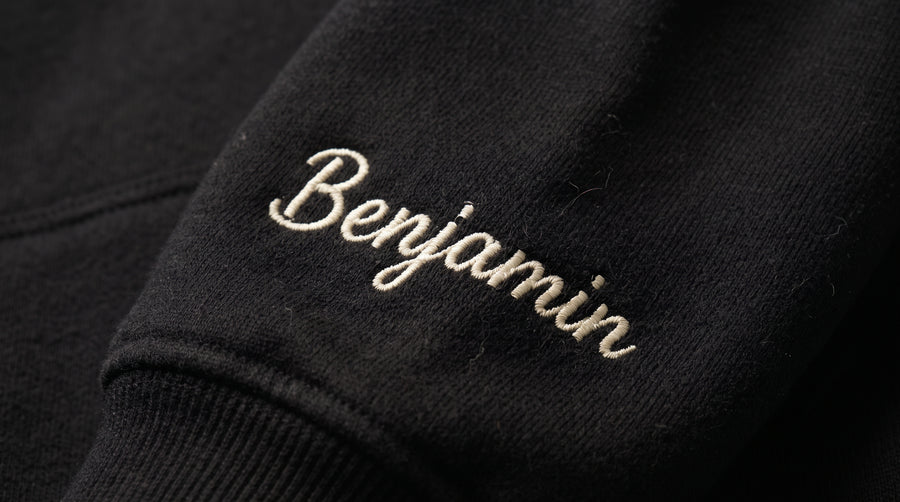
For the ceramicist and helper, the shared studio name may be enough. If a personal name would feel welcoming, let each wearer choose whether to include it and how it should appear. Collect the exact spelling, including accents, rather than copying a name from an old message.
Think about how the garment will be used later. A piece that belongs to one person can carry their preferred name comfortably. A garment shared between occasional helpers is usually easier to manage with the business identity alone. A removable name badge can handle changing introductions if that suits your setup.
Avoid stitching temporary responsibilities into a piece you want to reuse. The person handling payments this weekend may be wrapping purchases next time. Keep changing instructions on the stall, where you can update them.
Try a customer-view rehearsal
You do not need a finished order to test the basic idea. Start with a paper version of the proposed design held against the garment, then repeat the exercise with a sample if one is available. A paper layout helps with position; it cannot establish how the finished stitching will look.
Invite someone unfamiliar with the design to approach your mock stall. Let them look before explaining what you intended. Ask three specific questions:
- Which business do you think I am helping with?
- What wording can you read without moving closer?
- Does anything important disappear when I sit or put on my apron?
If the answer depends on the person already knowing your logo, consider a clearer wordmark, a different placement or a more visible colour combination. Test the revised idea in the same setup so you can compare the change.
For the next approval stage, our guide to embroidery proofs and stitch-outs explains what each preview can help you assess. Confirm what is included in your own project before relying on a particular sample format.
Write a brief about the interaction you want
“We need two branded sweatshirts” describes an item. “We want visitors to know whom to ask while we stand behind our display” describes the problem the item should solve.
Build your request around that second sentence. Include a photograph of the usual outfit, the approved business-name artwork, the proposed visible area and whether each piece belongs to a named person or a shared team. Add the quantity, chosen sizes and the date the garments are needed in hand.
Confirm garment options, costs and fulfilment arrangements directly before committing to a market-day plan. This guide does not assume a particular Chilliwack event, collection point or production schedule.
Explore Saffron & Pine as you develop your idea, and follow Saffron & Pine on Instagram for embroidery inspiration. The most useful detail may be the one that lets a visitor look up, recognise you and begin: “Could you tell me about this?”